How to use and evaluate “Cinematic potrait”
This fashion prompt is designed as an editable starting point, not a guaranteed one-click result. The notes below translate its JSON into a readable visual plan, identify the controls that matter, and show how to diagnose a weak generation without simply adding more text.
Prompt-specific blueprint
Scene and atmosphere
- Location
- A surreal luxury botanical garden with enormous emerald leaves, textured concrete walls, weathered stone architecture, dark climbing ivy, overlapping tree branches, floating petals, faded handwritten vintage diary notes, transparent geometric collage elements, cracked paper textures, premium canv…
- Time
- dusk with soft volumetric sunset light filtering through dense leaves
- Mood
- calm, mysterious, elegant, cinematic, timeless, luxurious, atmospheric, slightly surreal, and refined, with rich haze and layered botanical shadows
Visual treatment
- Photography
- Authentic ultra-realistic DSLR luxury fashion editorial photography, hyper-detailed, masterpiece quality, award-winning fashion photography, luxury Pinterest wallpaper aesthetic, timeless editorial composition, realistic skin and fabric texture, analog film grain, premium canvas texture, rich atm…
- Camera
- Extremely low camera position, dramatic side-profile half-body composition, cinematic 85mm portrait lens, shallow depth of field, elegant body angling, premium fashion framing, and vertical 4:5 aspect ratio
- Lighting
- Soft volumetric sunset lighting filtering through leaves, layered natural botanical shadows, a circular glowing eclipse halo formed naturally by overlapping tree branches, and realistic rim light outlining the subject's exact reference hair and neck. All facial lighting, skin temperature, shadows…
Composition and wardrobe
- People Count Label
- one uploaded reference person
- People Count
- single
- Reference Instruction
- Use one uploaded reference man as the sole main subject. Preserve his exact face and exact hair identity from the reference while naturally adapting facial angle, gaze, expression, head position, neck posture, hair movement, and hair placement to the requested low-angle side-profile scene. His ey…
- Wardrobe · Clothing
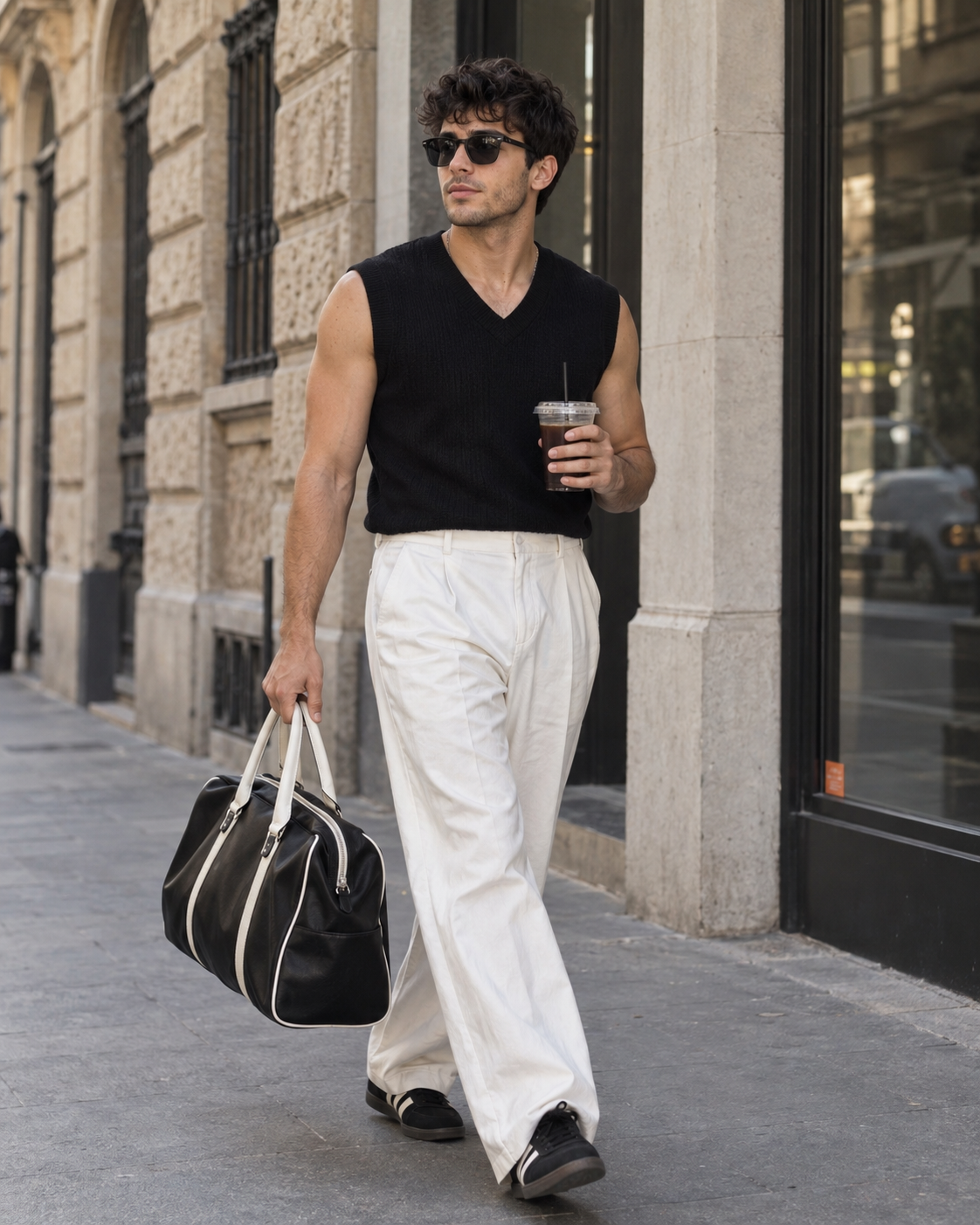
- An oversized forest-black linen shirt with loose sleeves, premium natural wrinkles, soft realistic fabric behavior, and a timeless minimalist luxury silhouette
- Wardrobe · Accessories
- Subtle silver accessories with refined, understated luxury styling
- Wardrobe · Fashion Direction
- Timeless minimalist luxury fashion with premium editorial styling
Recommended workflow
- 01
Prepare the input
Choose reference images you have permission to use. For Cinematic potrait, prioritize a clear subject and avoid unrelated people or private details in the frame.
- 02
Lock the visual plan
Confirm subject count, framing, scene, and lighting before adding finishing language. Resolve conflicts such as close-up versus full-body composition.
- 03
Adapt for one model
Start with ChatGPT Image. Keep a baseline generation and document the exact model version, references, aspect ratio, and visible settings.
- 04
Revise from evidence
Name the visible failure, change one instruction block, and compare it against the baseline. Keep only revisions that improve the intended criterion.
Model adaptation notes
ChatGPT Image
Keep the JSON structure, attach references in the same conversation, and use follow-up edits for one local correction at a time.
A compatibility label means the visual intent can be adapted; it does not promise identical output across providers, versions, or settings.
Prompt-specific quality checklist
- Preserve the reference person's exact hair color, length, density, texture, natural pattern, hairline, parting characteristics, and recognizable overall volume.
- Do not freeze the exact hair placement from the reference image. Rebuild individual strands, face-framing locks, volume, gravity, direction, and wind movement naturally for the requested head angle, low camera perspective, lighting, and environment.
- Ensure complete anatomical continuity between the face, head, hair, neck, shoulders, and body.
- The face must share the same lighting direction, shadow structure, skin texture, color temperature, sharpness, perspective, lens distortion, depth of field, and image resolution as the rest of the photograph.
- Include enormous emerald leaves, layered shadows on textured concrete walls, a natural circular eclipse halo through overlapping branches, floating flower petals, dark ivy, weathered stone architecture, fading handwritten diary notes, transparent geometric collage shapes, cracked paper textures, premium canvas overlays, slowly drifting emerald mist, subtle butterflies hidden in shadow, analog film grain, and rich atmospheric haze.
- Use a refined color palette of deep forest green, charcoal, muted olive, soft bronze, and dark graphite.
- No neon, no cyberpunk, no fantasy costume, no cartoon styling, no CGI appearance, no fake lighting, no oversaturation, no watermark, no logo, no unintended blur, and no duplicate face.
Failures to check before publishing
- pasted face
- copied face pose
- frozen reference expression
- duplicated head angle
- mismatched gaze direction
- face-body mismatch
- inconsistent lighting
Why the editable controls matter
Gender
Required identity direction for the reference subject.
People count
Default is a single uploaded reference person.
Outfit style
Changes Prompt.Outfit.Style without requiring a full prompt rewrite.
Identity or subject drift
Reduce competing style language, improve the reference, and separate stable traits from pose, gaze, and expression.
Composition breaks
Check whether crop, shot distance, aspect ratio, subject count, and required objects can all be satisfied in one frame.
Artificial lighting or texture
Name a motivated light source and believable material behavior before adding grain, grading, sharpness, or resolution terms.
 @cankirkgoz
Comments
Share the result you got, attach an image, and reply to other people's results.
You need to sign in to comment.