How to use and evaluate “Indoor Mirror Satin Dress Portrait”
This interior prompt is designed as an editable starting point, not a guaranteed one-click result. The notes below translate its JSON into a readable visual plan, identify the controls that matter, and show how to diagnose a weak generation without simply adding more text.
Prompt-specific blueprint
Scene and atmosphere
- Location
- a warm, softly lit indoor room with smooth wooden wardrobe panels in the background
- Time
- indoor evening or warm ambient interior lighting
- Mood
- cozy, slightly vintage, candid, playful, dreamy, intimate, effortlessly elegant
Visual treatment
- Photography
- hyperrealistic lifestyle portrait photography with cinematic warm color grading, slight grain texture, soft glow, ultra-detailed skin texture, realistic fabric highlights, precise shadows, and natural reflections
- Camera
- full-body portrait composition, mirror-facing indoor framing, natural depth of field, realistic perspective, polished stone countertop in the foreground with a few blurred objects adding realism and depth
- Lighting
- warm golden cinematic lighting with cozy ambient glow, soft highlights, subtle shadows, and a slightly vintage atmosphere
Composition and wardrobe
- People Count Label
- one uploaded reference woman
- People Count
- single
- Reference Instruction
- Use one uploaded reference woman as the main subject. She should be standing indoors facing a mirror, with both arms raised as she adjusts her messy loosely tied bun. Her mirror reflection should appear naturally at the bottom edge of the frame.
- Wardrobe · Main Item
- white satin mini dress
- Wardrobe · Fit
- sleek and fitted
- Wardrobe · Fabric
- smooth satin with gentle folds and a subtle sheen that reflects the ambient light
Recommended workflow
- 01
Prepare the input
Choose reference images you have permission to use. For Indoor Mirror Satin Dress Portrait, prioritize a clear subject and avoid unrelated people or private details in the frame.
- 02
Lock the visual plan
Confirm subject count, framing, scene, and lighting before adding finishing language. Resolve conflicts such as close-up versus full-body composition.
- 03
Adapt for one model
Start with Midjourney. Keep a baseline generation and document the exact model version, references, aspect ratio, and visible settings.
- 04
Revise from evidence
Name the visible failure, change one instruction block, and compare it against the baseline. Keep only revisions that improve the intended criterion.
Model adaptation notes
Midjourney
Translate the core fields into concise natural language and add current version-specific reference or aspect controls in Midjourney itself.
Gemini
Provide the JSON with clearly labeled reference images. Restate any ignored constraint in plain language without duplicating the whole prompt.
ChatGPT Image
Keep the JSON structure, attach references in the same conversation, and use follow-up edits for one local correction at a time.
Stable Diffusion
Move observable failures into the interface’s negative prompt field and document the checkpoint, sampler, guidance, and resolution used.
Flux
Preserve the semantic hierarchy but favor coherent natural language; weighting and negative-prompt behavior depend on the host workflow.
A compatibility label means the visual intent can be adapted; it does not promise identical output across providers, versions, or settings.
Prompt-specific quality checklist
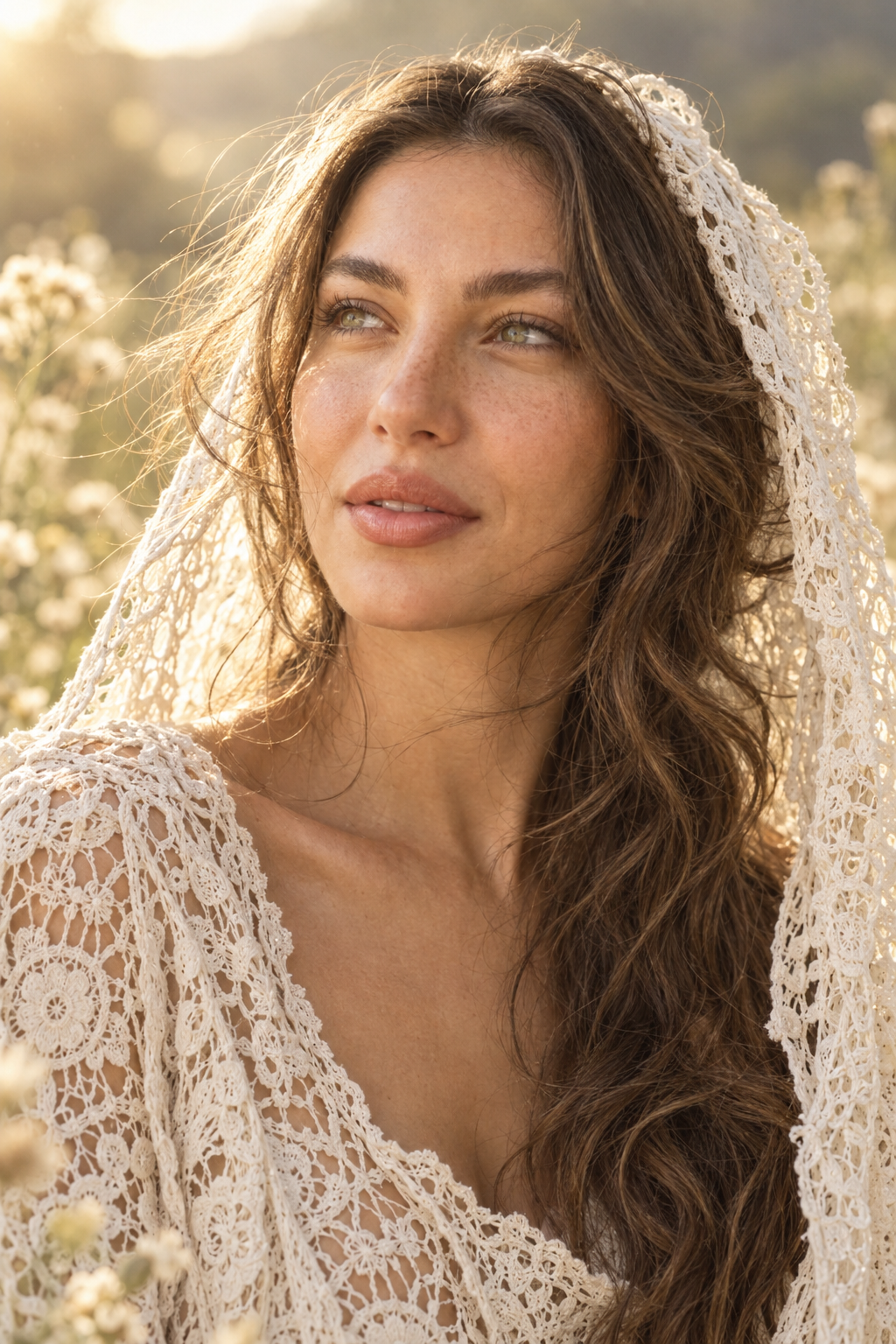
- messy loosely tied bun using the same hair color and hair texture from the reference image
- soft face-framing strands falling naturally on both sides
- natural flushed makeup
- rosy cheeks
- glossy lips
- smooth wooden wardrobe panels with vertical lines and muted earthy tones
- polished stone countertop in the foreground
Failures to check before publishing
- do not change the woman's identity
- do not alter her original hair color
- do not alter her original hair texture
- do not change her facial structure
- do not change her body proportions
- do not copy the exact reference pose, face angle, gaze direction, smile, or head tilt if it does not match the new mirror scene
- do not create a different person
Why the editable controls matter
Gender
Required identity direction for the reference subject.
People count
Default is a single uploaded reference person.
Identity or subject drift
Reduce competing style language, improve the reference, and separate stable traits from pose, gaze, and expression.
Composition breaks
Check whether crop, shot distance, aspect ratio, subject count, and required objects can all be satisfied in one frame.
Artificial lighting or texture
Name a motivated light source and believable material behavior before adding grain, grading, sharpness, or resolution terms.
 @cankirkgoz


Comments
Share the result you got, attach an image, and reply to other people's results.
You need to sign in to comment.