
How to use and evaluate “A Window-Seat Selfie on the Train”
This selfie prompt is designed as an editable starting point, not a guaranteed one-click result. The notes below translate its JSON into a readable visual plan, identify the controls that matter, and show how to diagnose a weak generation without simply adding more text.
Prompt-specific blueprint
Scene and atmosphere
- Location
- A normal train window seat with ordinary blue-grey seat upholstery, a slightly scuffed window surround, overhead rack edge and a piece of another empty seat. The outside scenery is smeared slightly by movement; interior remains mostly clear.
- Time
- Daytime train journey.
- Mood
- Quiet, comfortable and unremarkable.
Visual treatment
- Photography
- A normal unedited photograph from a personal phone camera roll. Mild everyday phone sharpening and compression, modest dynamic range, visible ordinary surroundings. Not a professional image, not deliberately styled to look candid, and not made artificially ugly or grainy.
- Camera
- Ordinary smartphone FRONT camera at arm length, about 24mm equivalent, slight near-arm enlargement and natural perspective.
- Lighting
- Window side of the face brighter, far cheek softly shaded, a little cool light from outside mixed with carriage light. No fill light, no glowing face treatment.
- Color Mood
- Ordinary default phone colour processing and believable white balance; no coordinated colour palette or cinematic grade.
- Depth Of Field
- Keep background details reasonably clear as a normal small-sensor phone does; no artificial portrait blur or creamy lens bokeh.
Composition and wardrobe
- People Count Label
- one uploaded reference person
- People Count
- single
- Reference Instruction
- Preserve the reference identity while changing expression and perspective naturally for this phone photo.
- Shot Type
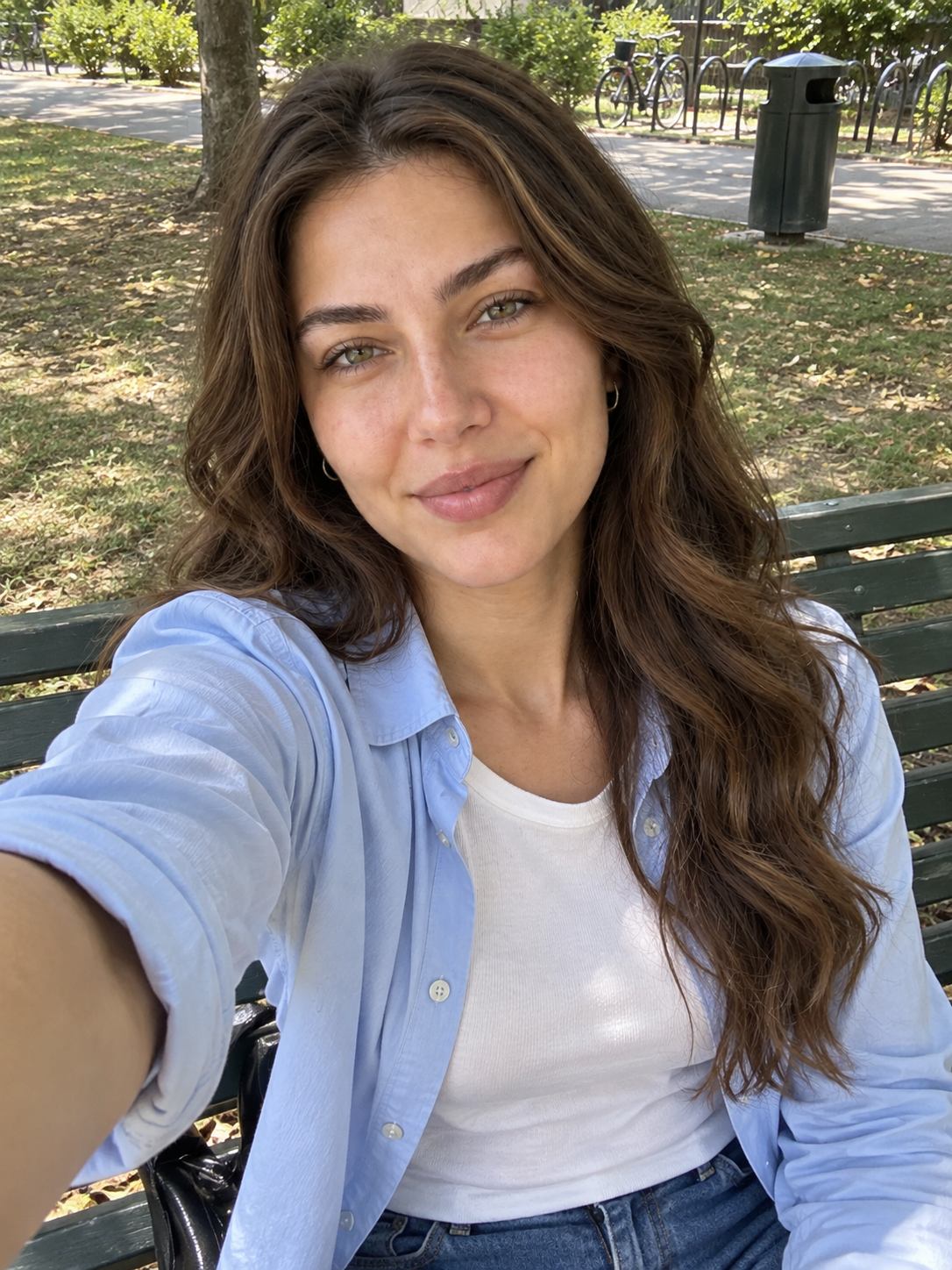
- 3:4 vertical chest-up selfie with one shoulder partly clipped and a slightly crooked carriage line. No visible phone or mirror.
- Wardrobe · Clothing
- A plain grey cotton tee with an unbuttoned dark-green cotton overshirt and normal dark jeans. Visible everyday fabric creases, hair naturally a little messy, no flashy watch or luxury travel styling.
- Wardrobe · Pose
- Seated back naturally, one arm extended to take the selfie; shoulders slightly uneven from the seat position and phone grip.
- Wardrobe · Hair
- Reference-accurate hair, ordinary flyaways and slight natural mess, not salon styling.
Recommended workflow
- 01
Prepare the input
Choose reference images you have permission to use. For A Window-Seat Selfie on the Train, prioritize a clear subject and avoid unrelated people or private details in the frame.
- 02
Lock the visual plan
Confirm subject count, framing, scene, and lighting before adding finishing language. Resolve conflicts such as close-up versus full-body composition.
- 03
Adapt for one model
Start with ChatGPT Image. Keep a baseline generation and document the exact model version, references, aspect ratio, and visible settings.
- 04
Revise from evidence
Name the visible failure, change one instruction block, and compare it against the baseline. Keep only revisions that improve the intended criterion.
Model adaptation notes
ChatGPT Image
Keep the JSON structure, attach references in the same conversation, and use follow-up edits for one local correction at a time.
A compatibility label means the visual intent can be adapted; it does not promise identical output across providers, versions, or settings.
Prompt-specific quality checklist
- Capture one believable photo with an ordinary reason for taking it: a selfie or asking someone to take a keepsake.
- Let the phone framing remain mildly imperfect; do not polish composition, lighting, clothing or location into a campaign.
- Anatomy and face identity must stay sound; imperfection comes from capture conditions, not from distorted bodies.
Failures to check before publishing
- advertising photograph
- fashion campaign
- editorial photography
- cinematic film still
- professional portrait lighting
- studio fill light
- reflector lighting
Why the editable controls matter
Gender
Required identity direction for the reference subject.
People count
Default is a single uploaded reference person.
Lighting
Changes Prompt.Style.Lighting without requiring a full prompt rewrite.
Mood
Changes Prompt.Scene.Mood without requiring a full prompt rewrite.
Color palette
Changes Prompt.Style.Color Mood without requiring a full prompt rewrite.
Shot size
Changes Prompt.Composition.Shot Type without requiring a full prompt rewrite.
Identity or subject drift
Reduce competing style language, improve the reference, and separate stable traits from pose, gaze, and expression.
Composition breaks
Check whether crop, shot distance, aspect ratio, subject count, and required objects can all be satisfied in one frame.
Artificial lighting or texture
Name a motivated light source and believable material behavior before adding grain, grading, sharpness, or resolution terms.
 @cankirkgoz
Comments
Share the result you got, attach an image, and reply to other people's results.
You need to sign in to comment.